

Taj Mahal Foxtrot
Banner
  • About the book and the author
  • Audio Guide to Taj Mahal Foxtrot
  • Join Facebook Group
  • Buy the book
    India jazzIndo-jazz fusion

    The musical journey of Indo-jazz guitarist Arthur Gracias: Part 1

    by naresh fernandes September 18, 2021
    written by naresh fernandes


    “Early mornings, I could hear the church bells ringing,  azaan from the mosque and chants from the Hindu temples.”

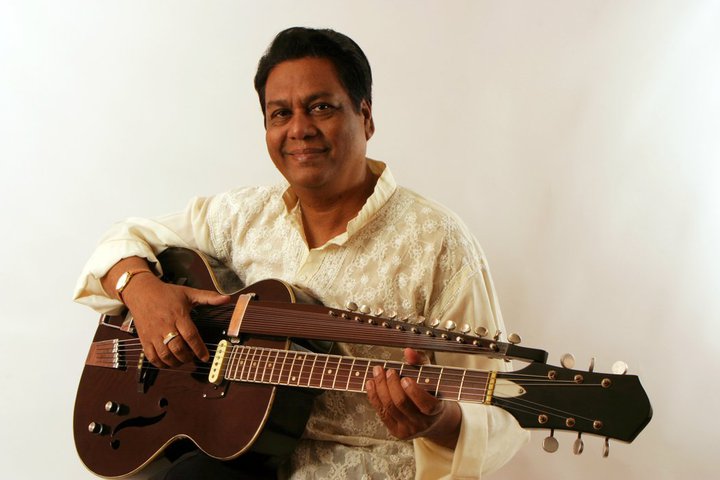
    Those are among the earliest memories of Indo-jazz guitar player Arthur Gracias. He bow lives in Australia but for four decades from the late 1960s, he was a prominent part of the Calcutta music scene.

    At my prodding, he wrote this account of his musical journey.


    I was born in a musical family in Calcutta on June 4, 1948. My parents played piano and guitar so I was exposed to music from a very young age. We had regular music sessions at home with relatives and friends.

    My father was born in India in 1900. His father was a Spanish trader who came to India . My mother was born in India in 1910 of Anglo Indian parents . I have one sister.

    I studied at St Paul’s Mission School, Calcutta. I learned to play Western classical music (at the Royal School of Music), Indian classical music and jazz.

    Mother Teresa was our neighbour. My father did social work for Mother and accompanied her to care for the lepers and the poorest of the poor in the villages. I  was very young  then and went along with my father, Mother Teresa, Sister Gertrude and Sister Agnes. Early mornings on Sundays  we travelled in a blue ambulance which had an emblem with the words “Touch the lepers with your compassion.”

    It was very sad that these people were treated as untouchables. She  treated every human being with love and respect and did not discriminate against any caste or creed. Mother was my inspiration. Many of my friends joined her order, (Missionaries of Charities ) pursuing her values and principles.

    In 1967, I joined Felix Torcato’s  Quartet at the Oberoi Palace Hotel in Kashmir. The next year, I began to perform with pianist Sonny Lobo at Prince’s, at the Oberoi Grand Hotel in Calcutta.
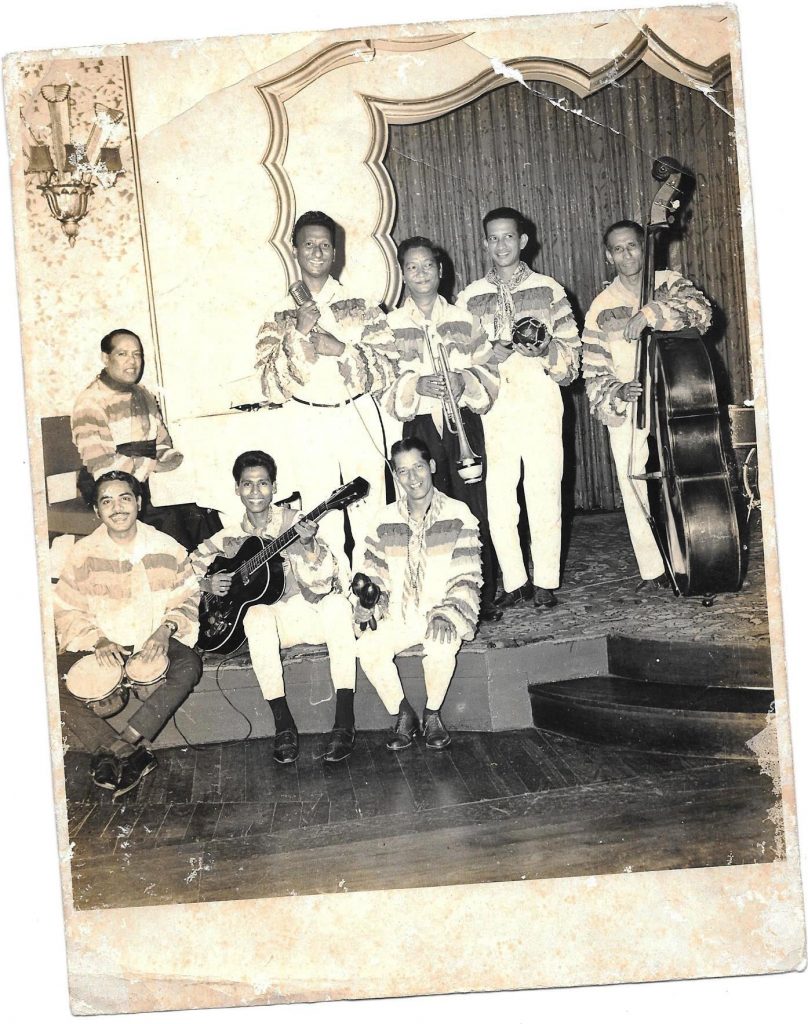
    The Sonny Lobo band at the Oberoi Grand. Sonny Lobo (piano), Rubin Ribeiro (vocals) Jimmy Sams (trumpet/violin), Michael Dias (tenor/alto, clarinet/violin), Bostio Fernandes (bass) (sitting) Lester Rozario (drums), Arthur Gracias (guitar). Custod Silveira (tenor/ alto/ clarinet/violin).

    In this photo, the frilled shirts we are wearing in the photograph was for a special “Latino night” at which we played music of Xavier Cugat, Perez Perado, and Victor Sylvester.

    Sonny Lobo was regarded as the Duke Ellington of the East. He had a dynamic personality and was a brilliant pianist. He was a strict disciplinarian and had the best musicians in the country to execute the challenging music. They had to be versatile and perform on two or more musical instruments.

    Sonny was on piano and the arranger. He regularly imported orchestrations of Duke Ellington, Count Basie etc. from the the UK and the US. He encouraged me to transcribe music from records and arrange and  orchestrate it for the band.

    We performed classical music overtures  and Viennese Waltzes for lunch sessions and high society dance music for the night sessions. If you stuffed up the music you had to stay back the next day  and practice till perfected after the lunch session.

    The musicians had to be well dressed (in dress suits ). A waiter was assigned to look after the band. He knew each file for the musicians and placed them on their respective music stands before the band commenced and removed them after. He also took our lunch, dinner and supper orders and ensured the food was ready during the break.

    We were highly paid and provided with accommodations for our families.

    Sonny was musical director for all Oberoi Hotels in India and booked entertainers, cabaret artistes and spot singers from around the globe.

    The clientele at Prince’s were the top notch of society and did not mind spending lavishly to enjoy the best in entertainment, exotic food and wines. Those were “grand” times.
    Indo-jazz concert at Calcutta’s Kala Mandir, 1972.

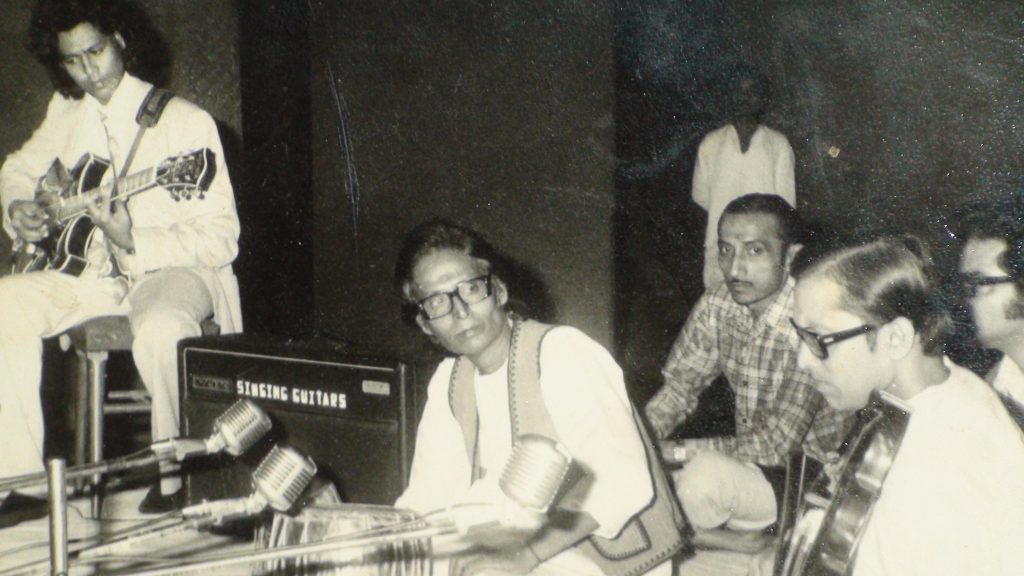
    Performance at an Indian classical music conference  at Calcutta’s Rabindra Sadan in September 1972, which continued for three consecutive nights with some of the finest musicians in the country.

    A  jugalbandi (duet ) with Pandit Dulal Lahiri on violin, myself on Guitar and the great Pandit Nanku Maharaj on tabla. We explored the Raag Piloo in the North Indian style in three movements , alaap, jor andjhala. In Jhaptaal  ( a rhythmic cycle of 10 beats), the exploration of the piece lasted 45 minutes. It was deep and expressive.
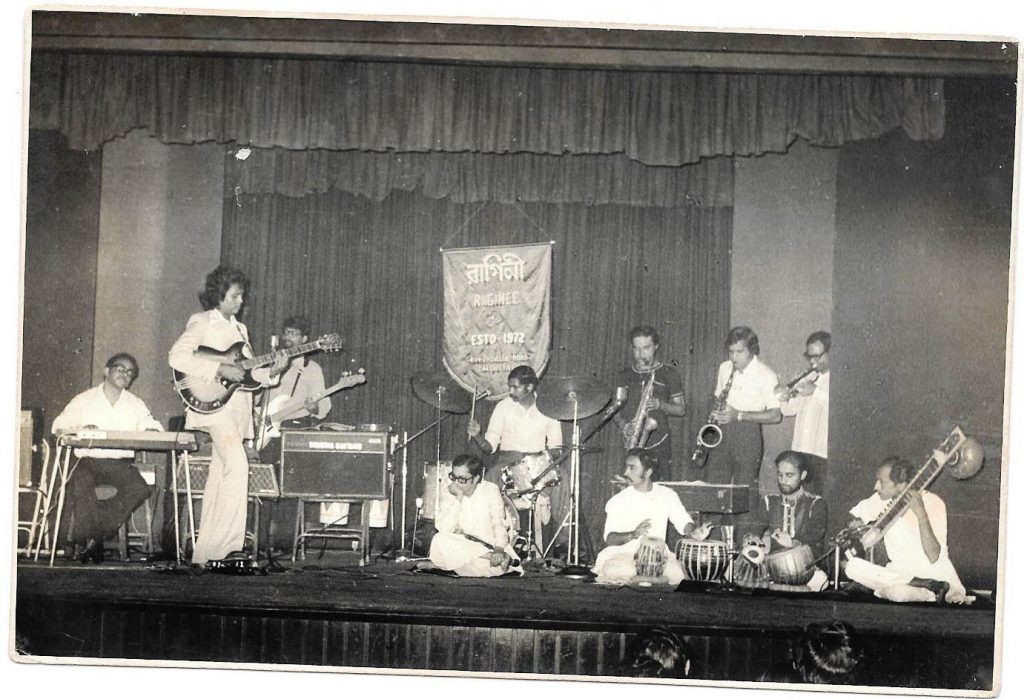
    Indo-jazz concert at Calcutta’s Kala Mandir, 1972.

     Using an Indian section of sitar, violin and two tablas and western section of trumpet, alto sax, tenor sax, keyboard, bass guitar, drums and guitar. My compositions were based on various raags, with inherent harmonies  in symmetrical  and asymmetrical rhythmic structures. One of the compositions,   entitled Freedom and Equality, was  based on the Raag Kafi  and lasted 30 minutes .

    The concert was well received by the audience and had rave reviews un the press.The Junior Statesman wrote “GOODNESS GRACIAS IT’S ARTHUR.” The experiment was brave, bold and successful. It was an attempted to create an entirely new musical language. It was broadcast on BBC by Humphrey Walwyn. Many radio and television broadcasts followed. At the timem I was adjudicator of All India Radio, Eastern India.
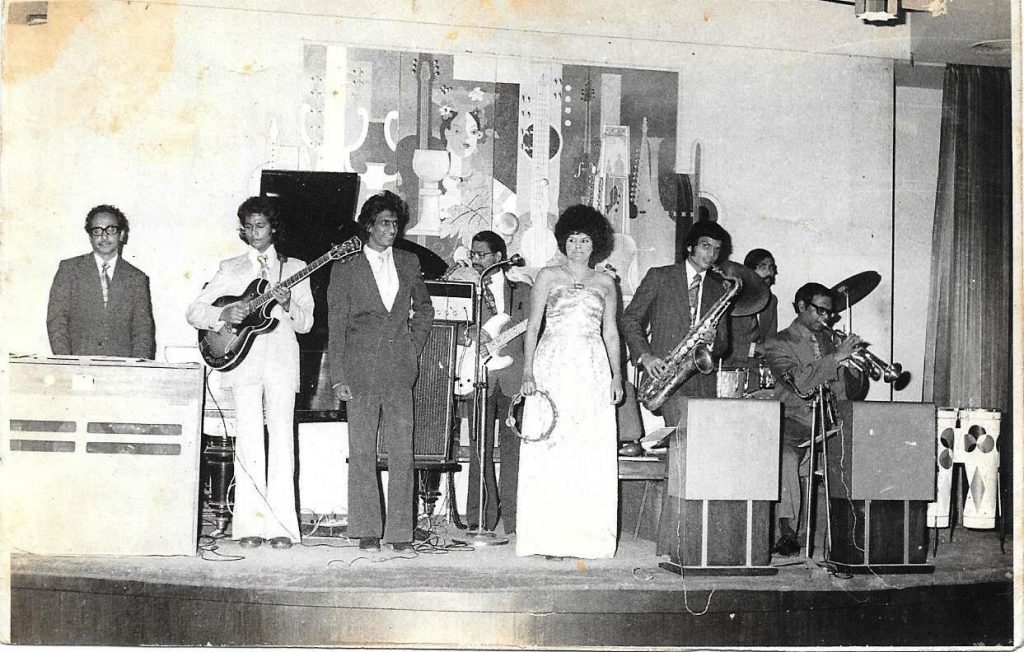
    The Arthur Gracias Sextet  performing at the Hotel  Hindusthan International in Calcutta.

    The lunch sessions we played soft easy listening music: bossa nova, boleros, beguine and waltzes. The band livened up at night playing soul, blues, funk, jazz and popular music. We had a very strong following. The dance floor would be jammed packed on weekends. The band also performed on radio and television  regularly.
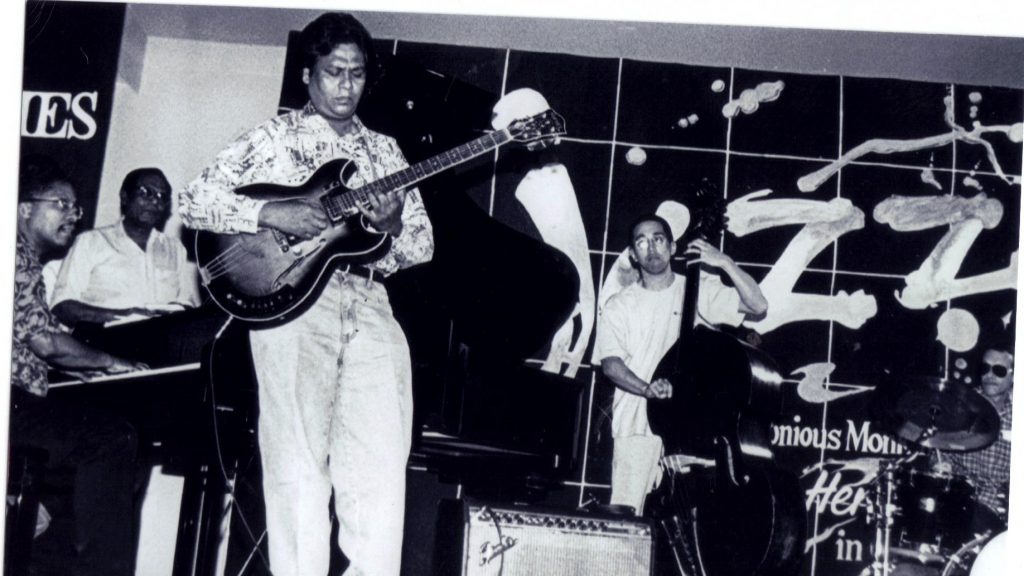
    For jazz enthusiasts in the city of Calcutta it was all that jazz and much more when Herbie  Hancock  and members of The Thelonious Monk Institute of Jazz performed in the city in 20017. I sat in with the band.

    This event was organised by the United States Information Service. The idea was to reinforce the interest in this form of  music. Some say jazz evolved from a mix of dance music and marching band music among the African American community and started sometime in the late 1800s in the American South.

    Whatever it’s origins, it’s clear that jazz has been the voice of freedom for so many countries over the past half century.

    More next week.

    September 18, 2021 0 comment
    0 FacebookTwitterPinterestEmail
  • BombayIndia jazzTaj

    Finally, a photo of Mena Silas, the man who wrote ‘Taj Mahal – A Foxtrot’

    by naresh fernandes September 7, 2021
    by naresh fernandes September 7, 2021

    In December 2020, just over nine years after I first wrote about my attempt to dig out information about Mena Silas, the Bombay musician who had composed Taj Mahal: A Foxtrot in 1936, …

    0 FacebookTwitterPinterestEmail
  • AudioBombayHindi film musicIndia jazzIndo-jazz fusionJazz

    Still More Bollyjazz

    by naresh fernandes May 25, 2020
    by naresh fernandes May 25, 2020

    Another episode in our series about jazzy tunes that inspired Bollywood. From Phool Aur Patthar (1966), sung by Asha Bhonsale, here’s Zindagi Mein Pyar Karna Seekh Le. The music was …

    1 FacebookTwitterPinterestEmail
  • Uncategorized

    We like Ike: A 100th birth anniversary tribute

    by naresh fernandes October 17, 2019
    by naresh fernandes October 17, 2019

    A tribute to Ike Isaacs by his nephew, the Australian pianist-composer Mark Isaacs. See his website here. Ike Isaacs with Wes Montgomery. My forebears on both sides of the family …

    0 FacebookTwitterPinterestEmail
  • Indo-jazz fusionJazzUncategorized

    Liner notes for Braz Gonsalves’ Devapriya

    by naresh fernandes February 20, 2018
    by naresh fernandes February 20, 2018

    A few months ago, I received a request from the excellent Florian Pittner, who runs Hindustani Vinyl, the online record store that with the best collection of classic Indian and …

    0 FacebookTwitterPinterestEmail
  • India jazzIndo-jazz fusionJazz

    Jehangir Dalal talks about his friend, Sonny Rollins

    by naresh fernandes June 3, 2015
    by naresh fernandes June 3, 2015

    The excellent Jehangir Dalal, without whose generosity Foxtrot would not have been written, has been a friend of the colossal saxophonist Sonny Rollins for more than five decades. He recounts …

    0 FacebookTwitterPinterestEmail
  • BombayIndia jazz

    Saxophone colossus Sonny Rollins in Powai

    by naresh fernandes June 14, 2014
    by naresh fernandes June 14, 2014

    “I had no idea there were so many ashrams around Bombay!” More than four decades after he and his friend Jehangir Dalal got into a car and drove to more …

    0 FacebookTwitterPinterestEmail
  • AudioIndia jazzIndo-jazz fusionJazz

    Asha Puthli Cuts Loose

    by naresh fernandes May 10, 2014
    by naresh fernandes May 10, 2014

    A version of this piece appeared in Time Out Mumbai in 2006. Asha Puthli has a somewhat unorthodox relationship with time. When she’s asked about her age, for instance, the …

    0 FacebookTwitterPinterestEmail
  • AudioBombayIndo-jazz fusionJazz

    L Shankar shouts the blues

    by naresh fernandes March 15, 2014
    by naresh fernandes March 15, 2014

    (This is the second part of the BBC documentary Bombay and Jazz. I wrote about the first part last fortnight here.) Quite improbably, the maestro mispronounces his own name. “Hi,” …

    1 FacebookTwitterPinterestEmail
  • AudioBombayIndia jazz

    Don Cherry and his Bombay gumbo

    by naresh fernandes March 1, 2014
    by naresh fernandes March 1, 2014

    On New Year’s Day in 1992, a few hundred Bombay fans gathered in the very new Priyadarshani Park on Nepean Sea Road to listen to an eclectic bunch of musicians …

    0 FacebookTwitterPinterestEmail
Newer Posts
Older Posts

Navigate

  • About the book and the author
  • Audio Guide to Taj Mahal Foxtrot
  • Buy the book
  • Reviews, Notices, Interviews
  • The Marco Pacci Collection

Recent Posts

  • Randy Brecker and the Indiana University Jazz Ensemble, Bombay 1966
  • Bandra’s Beatle: Chasing George Harrison’s guitars
  • Liner notes for Explorations
  • Taj Mahal Foxtrot gets a 21st century update
  • Hal Green’s Manuscript Books

Facebook

Facebook

New Comments

  • Harvesh Marwaha on Pam Crain
  • Lynne Murphy on The Myrtle Mystery Is Solved
  • Lynne Murphy on The Myrtle Mystery Is Solved
  • Robert Young on Calcutta’s Hawaiian Summer
  • Bashir Sheikh on A Woman in a Man’s World

Archives

  • July 2025
  • December 2024
  • November 2024
  • July 2024
  • June 2024
  • February 2024
  • January 2024
  • December 2023
  • January 2022
  • September 2021
  • May 2020
  • October 2019
  • February 2018
  • June 2015
  • June 2014
  • May 2014
  • March 2014
  • February 2014
  • January 2014
  • December 2013
  • November 2013
  • October 2013
  • September 2013
  • August 2013
  • July 2013
  • June 2013
  • May 2013
  • April 2013
  • March 2013
  • February 2013
  • January 2013
  • December 2012
  • November 2012
  • October 2012
  • September 2012
  • August 2012
  • July 2012
  • June 2012
  • May 2012
  • April 2012
  • March 2012
  • February 2012
  • January 2012
  • December 2011
  • November 2011
  • October 2011
  • September 2011
  • August 2011
  • July 2011
  • June 2011
  • May 2011

About the book

Audio Guide to the book

The Marco Pacci Collection

  • Facebook
  • Twitter
  • Soundcloud

@2020 - All Right Reserved. Designed and Developed by Reset


Back To Top
Taj Mahal Foxtrot
  • About the book and the author
  • Audio Guide to Taj Mahal Foxtrot
  • Join Facebook Group
  • Buy the book